Trenchless Replacement and Installation of Utility Lines
Efficient renewal of utility lines in confined urban environments
Trenchless, Cost-Effective Pipe Rehabilitation Using the hydros® Method
Our hydros® methodsoffer significant advantages for the rehabilitation of utility lines in urban pipeline construction. They are particularly cost-effective in confined spaces and where pipelines are densely concentrated. A drastic reduction in earthwork and old pipe removal, along with in-place and vibration-free operation, are additional features specific to KARL WEISS.
Ihr Kontakt zu uns!
Sie interessieren sich für unsere Leistungen und
wünschen ein Beratungsgespräch.
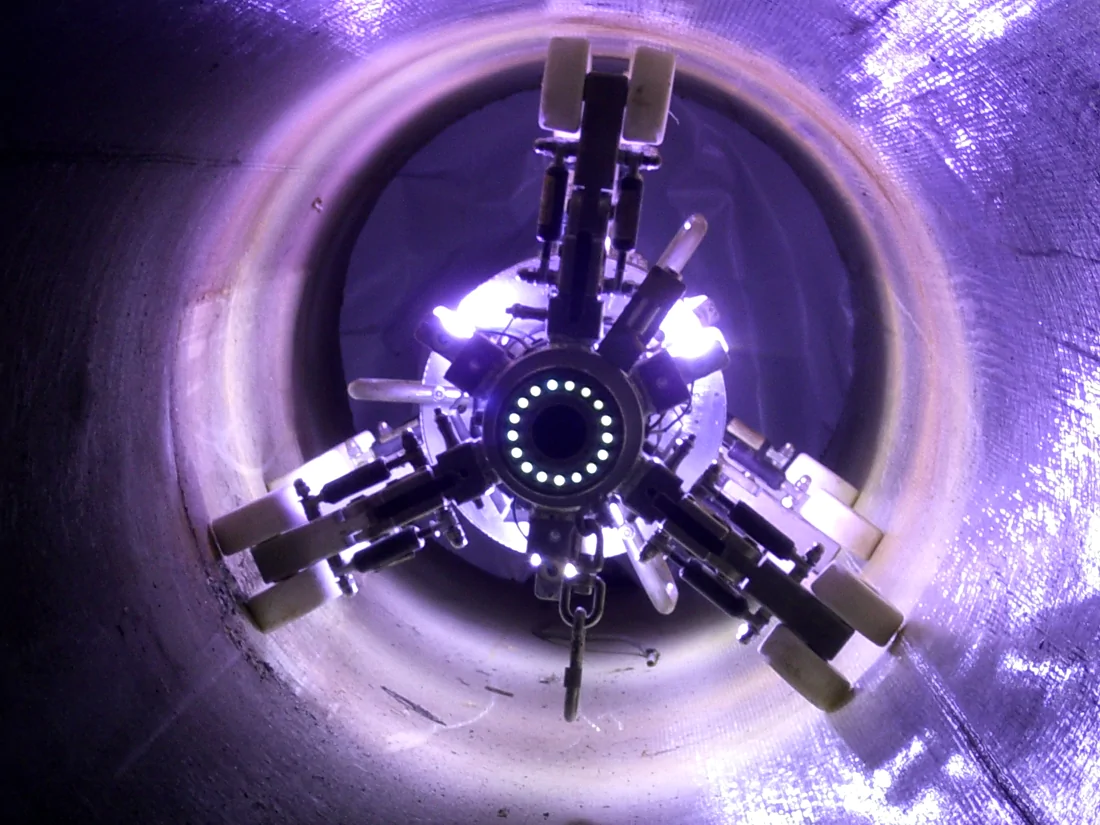
Custom-designed equipment for pipe rehabilitation and installation
Custom-designed, proven, and efficient technical equipment is available for the following applications:
hydros®PLUS: Pipe Replacement
The original method is known as the press-and-pull process for replacing pressure pipelines made of brittle-fracturing materials.
hydros®STEEL: Pipe Replacement
A special cutting and expanding head is used here in conjunction with the hydros®PLUS pulling unit, specifically for the replacement of pipes made of ductile materials.
hydros®STAR: Pipe Relining
With an additional pilot drilling rig and, if necessary, a flushing head, this method allows for the installation or replacement of pipes with significant differences in diameter.
Of course, our trenchless technologies for utility lines meet all the requirements of the DVGW regulations.
hydros®PLUS: Replacement of Utility Lines
Trenchless replacement method for utility lines in drinking water and gas supply systems up to a diameter range of DN 400 (400 mm) and individual pull sections up to 150 m in length. These single pull sections are subdivided into partial pull sections up to 50 m in length due to the need for intermediate excavation pits for service lines, fire hydrants, etc.
When using PE corrugated pipe, installation rates of over 100 m per day can be achieved. The complete removal of the old pipes from the ground and the vibration-free operation protect the root systems of vegetation from damage, unlike other known methods. This environmentally friendly approach was recognized by the State of Berlin with the Innovation Award for Environmental Technology. Furthermore, the trenchless replacement of asbestos-cement pipes has been tested by the German Social Accident Insurance Institute for Occupational Safety (BIA) and included in BGI 664 under reference number BT 13. Due to the extremely low noise emissions (<55 dB(A)), the Berlin Environmental Agency has granted a general 24-hour exemption for the process.
hydros®STEEL: Renewing utility lines—not just steel ones
A trenchless rehabilitation method for utility lines in drinking water and gas distribution systems with diameters up to DN 300 and lengths of up to 200 m. The hydros®STEEL methodis based on the proven hydros®PLUS methodand is primarily used for the renewal of steel pipes as well as ductile iron and plastic pipes, particularly PE pipes.
During the process, the old pipe is severed by the cutting head, expanded, and—in the same operation—the new pipe string is pulled in, preferably with external protection. The severed old pipe remains in the ground as a protective sleeve for the new pipe.
The original nominal diameter is retained or can be increased by one size; in special cases, using a specialized technique, it can even be increased by two sizes.
Operational safety is guaranteed because, due to the nature of the process, no closed cavity is created between the old and new pipes. To connect house and other service lines, the protective cap is quickly and safely removed using a simple, specialized technique.
hydros®STAR: Installation of Utility Lines
This further development of the hydros®PLUS methodis used for the trenchless installation of pressure pipelines with an outer diameter of up to 600 mm and section lengths of up to 100 m. First, the new route is precisely established using laser-guided pilot drilling. The pipe is then pulled into place—depending on its dimensions—via soil displacement or controlled hydraulic soil removal.
The combination of standard pilot drilling technology and the hydros®PLUS techniqueensures a cost-effective and safe installation method. Depending on soil conditions, the displacement method is used for pipes up to DN 200.
For larger diameters, our hydraulically operated flushing head is used to drive the new pipeline route. Unlike other known installation techniques, this prevents soil washout. Since only water is used as the flushing medium, handling is significantly simpler compared to clay-based flushing agents.
When using the flushing head, the hydros®STAR methodcan also be used to replace pipes with large differences in diameter, such as DN 100 to DN 400.